Run Rivet inside your perimeter.
Keep runtime, control plane, and data under the controls your team already operates. The same platform that powers Rivet Cloud.
In your VPC, on-prem, air-gapped, or embedded.
Runs in your existing backend
Rivet control plane
Scheduling · routing · observability
Your data
 Postgres
 SQLite
 S3
S3 FoundationDB
Everything in Enterprise Edition.
The multi-tenancy and operations layer on top of the open-source control plane.
- Actor control plane
- FoundationDB persistence layer
- Cloud layer for multi-tenant
- SQLite backup
- SQLite PITR
- Forking
- ACL system
- ACL for agents
- Advanced ClickHouse analytics
- OpenTelemetry integration
- Alert manager rules, Prometheus rules, Grafana configs
- Kubernetes manifests
- Air-gapped & sovereign-cloud deployments
- Priority support & SLA
- Hardening guidance for FedRAMP, HIPAA, and regulated industries
Keep deployment inside your existing boundary.
The control plane runs under the controls you already have. Nothing needs to leave the boundary.
- No required outbound control-plane connections
- Crash reporting can be disabled with one configuration flag
- Operator-selected network and storage boundaries
- Documented air-gapped deployment path
- Integrates with existing access and network controls
A footprint your ops team will sign off on.
The same artifact runs from laptop to production.
Single Rust binary
One process to install, monitor, and upgrade.
Kubernetes or systemd
Deploy with the Enterprise Helm chart or a systemd unit.
Mainstream databases
Runs on Postgres and SQLite. Backups and S3 storage are managed for you.
Local dev identical to production
Local development is the same as what you deploy to production.
Observe the whole stack.
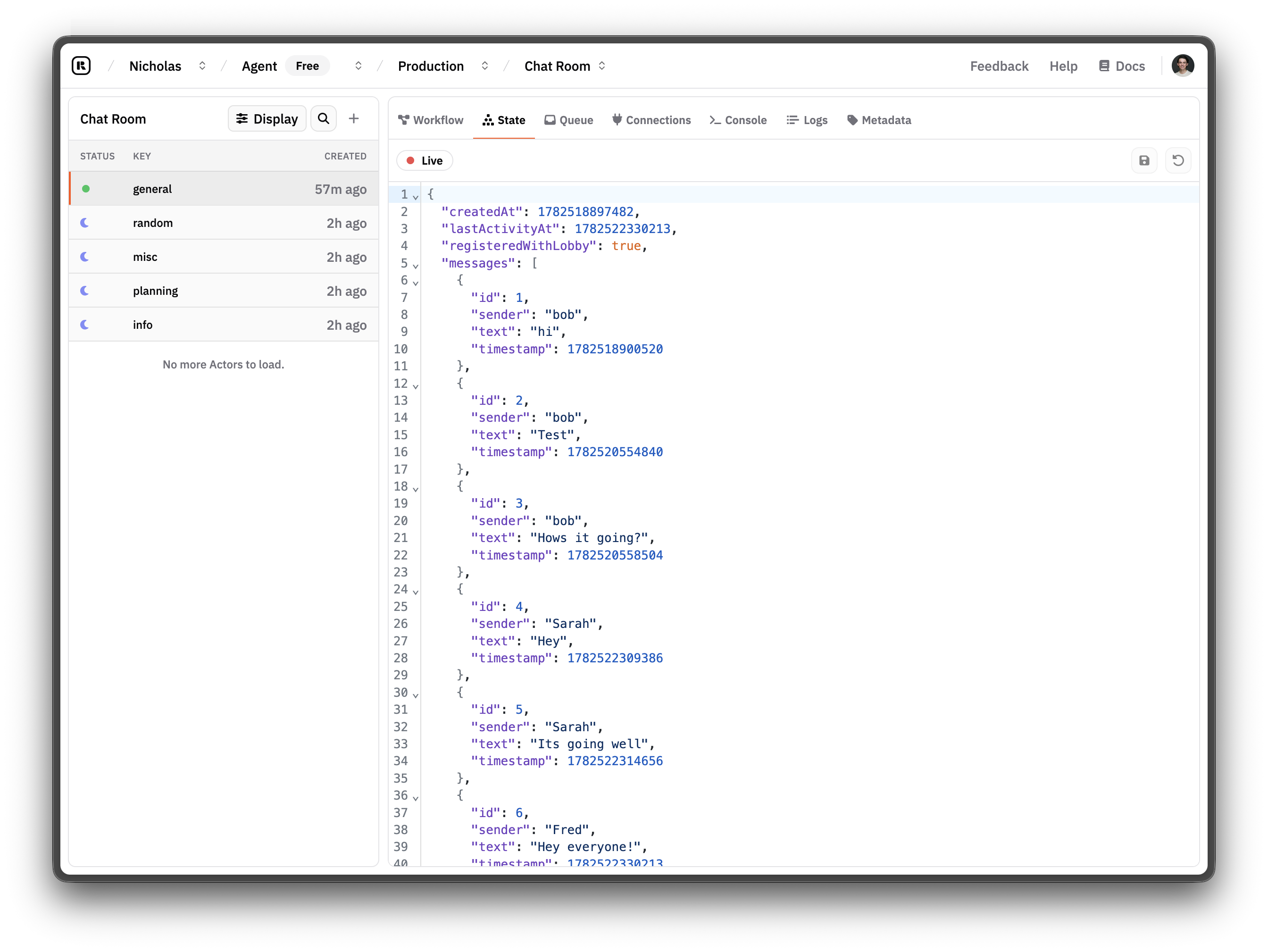
Every deployment includes the Rivet dashboard.
Local to production
The same dashboard runs against local dev, your VPC, and air-gapped deployments.
Observe your stack
Inspect actor state, SQLite data, workflow progress, events, and logs in one place.
Composable by design
Actors, agentOS, Workflows, and Dynamic Apps build on one primitive, so one dashboard covers them all.
Bring Rivet inside your boundary.
Walk through your deployment model with an engineer, or start with the self-hosting docs and run it yourself.